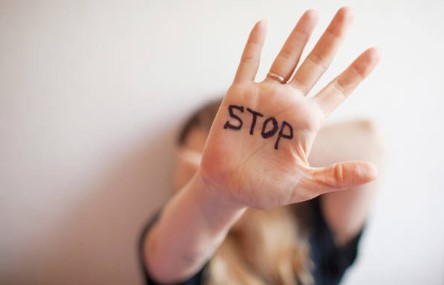
Gender Based Violence has been a critical challenge since ages. It is a human rights concern around the globe. Vulnerable sections of the society have suffered dominance in all parts of the world in one form or other. One among such being gender-based violence has many forms like physical violence, psychological violence, verbal violence, sexual violence, intimate partner or domestic violence and socio-economic violence.
"GLOBALLY, OVER 35% WOMEN HAVE FACED VIOLENCE IN SOME OR THE OTHER FORM IN THEIR LIFETIME. UNITED NATIONS DEFINED ‘VIOLENCE AGAINST WOMEN’ AS “ANY ACT OF GENDER-BASED VIOLENCE THAT RESULTS IN, OR IS LIKELY TO RESULT IN, PHYSICAL, SEXUAL OR MENTAL HARM OR SUFFERING TO WOMEN, INCLUDING THREATS OF SUCH ACTS, COERCION OR ARBITRARY DEPRIVATION OF LIBERTY, WHETHER OCCURRING IN PUBLIC OR IN PRIVATE LIFE.”
In a study done in India, on 10000 women as study subjects, 26% reported physical violence from spouses during their lifetime. This prevalence could be as high as 45% in states like Uttar Pradesh. Similarly, according to NFHS-5 in 2019-2021, almost 30% married women aged 18-49 years said to have experienced spousal or intimate partner violence. Gender-based violence in India had varied forms which include domestic violence, dowry death, human trafficking, sexual violence, acid attacks, unnatural offences and honour killings.
"WHY IS GENDER-BASED VIOLENCE A PROBLEM AND THE ANSWER LIE IN THE FACT THAT IT IS NOT ONLY A HUMAN RIGHTS VIOLATION; IT ALSO UNDERMINES A PERSON’S SENSE OF SELF-WORTH. IT IMPACTS A WOMEN’S PHYSICAL AND MENTAL HEALTH, OFTEN LEADING TO DEPRESSION, PTSD, SUICIDES AND SELF-HARM PRACTICES."
Gender based violence is a form of a discrimination which is based on the stereotypes against women and other genders in the society. It pushes the effected women and other gender into the vulnerable sections of the society leading to their marginalisation. It is also an obstacle to the concept of gender equality, equal resource access and distribution in the society.
GENDER BASED VIOLENCE IS A FORM OF DISCRIMINATION WHICH IS BASED ON THE STEREOTYPES AGAINST WOMEN AND OTHER GENDERS IN THE SOCIETY. IT PUSHES THE AFFECTED WOMEN AND OTHER GENDERS INTO THE VULNERABLE SECTIONS OF THE SOCIETY LEADING TO THEIR MARGINALISATION. IT IS ALSO AN OBSTACLE TO THE CONCEPT OF GENDER EQUALITY, EQUAL RESOURCE ACCESS AND DISTRIBUTION IN THE SOCIETY
Due to gender-based violence, there is loss of resources and employment by victims. It makes people underachieve at work and in education and thereby impact the demographic dividend of a country. Various factors are responsible for such violence like socio-cultural factors in which patriarchal views often legitimise violence to ensure the dominance and superiority of men in the society. Traditional norms of the societies allow the killing of women suspected of defiling the honour of the family. Norms around sexuality also account for the high prevalence of hate crimes against LGBTQA+ community as well.
Similar norms around sexuality also account for the rape of women and other social pathologies in the society. Other factors include Legal & Economic factors. A well-known fact that Criminalisation of homosexuality is still very recent in many societies. In India, in 2018 a five-judge bench unanimously struck down Section 377 of the Indian Penal Code, to the extent that it criminalised same-sex relations between consenting adults. Such processes lead to a backlash in a society which is bounded by so much hate and violence in the form of tradition and culture. Unemployment and poverty affect LGBTQA+, women & other vulnerable sections of the society which often result in violence and discrimination against them.
As healthcare professionals, our role is important and should be well defined. Providing care to the survivors which can be better understood and addressed from the various dimensions of health, which defines it as ‘an individual's state of physical, mental and social well-being’. Health providers should reassure women that violence is unacceptable and that no woman deserves to be abused, or suffer emotionally. Information, education and communication about their rights and a fact that violence in any form should never be accepted, is the need of the hour. Reporting of such cases along with medico legal guidelines should be addressed. Accordingly, such cases should be handled with utmost care and sensitivity with appropriate counselling and referrals to the desired department and institutions.
Way forward and recommendations can be many but focus should be on increasing resources for shelters and telephonic services to meet the demand for rescue and rehabilitate.
- To provide integrated support and assistance to women affected by violence irrespective of age, class, caste, education status, marital status, race and culture.
- Immediate emergency and non-emergency care services should be provided to the people impacted by violence of any form.
- Using telemedicine and efficient online counselling services to the affected to guide them in the needful times.
- Piloting innovative uses of social media for awareness among the masses to change human behaviours.
- Representation and election of more women leaders in public roles like politics, civil servants, bureaucracy, law & justice.
- Make information and communication channels accessible for women with disabilities and older women. Scale up public awareness campaigns for sensitisation.
- Increase funds and resources to women’s organizations for their social and economic empowerment and thereby enabling their access to secure and long-term income.
- Focussing on providing more employment opportunities for women, developing more self-help groups in the peripheries of India to improve their economic access and support micro-financing.
- Human rights have a major component of gender-based rights thereby a need to scale up public awareness campaigns for sensitisation is the need of the hour.